
The best places to find coupons include official retailer websites, store apps, loyalty programs, email and text offers, trusted coupon databases, browser extensions, cashback platforms, weekly ads, product packaging, receipts, and direct mail. Start with official sources, compare third-party offers, and verify every coupon’s terms before making a purchase.
Coupons can take several forms, including promo codes, printable coupons, digital offers, manufacturer coupons, store discounts, rebates, loyalty rewards, and free-shipping promotions. Knowing where each type appears helps you spend less time searching and reduces the chance of using an expired or ineligible offer.
New shoppers who need an explanation of how promotional codes work can first read what is coupon code before exploring the sources below.
Best Places to Find Coupons at a Glance

The best coupon source depends on where you are shopping, what you are buying, and whether you want an immediate discount or a reward after the purchase. Official retailer channels usually provide the most reliable terms, while third-party tools make it easier to compare offers across multiple stores.
Check Official Retailer Sources First
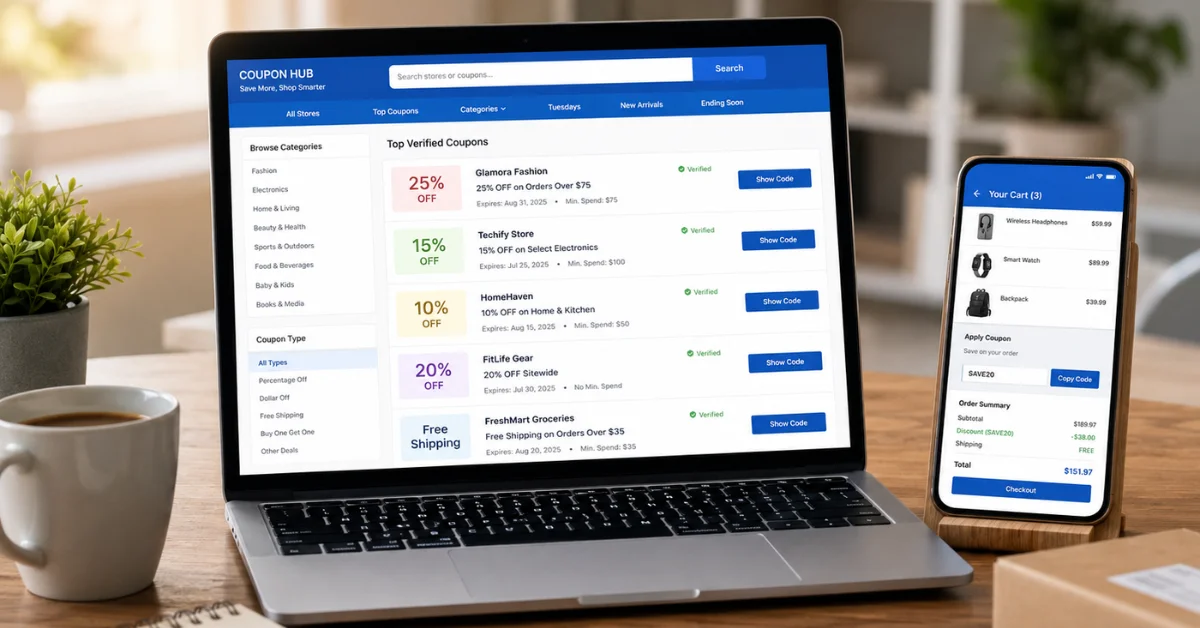
Official retailer sources are websites, apps, loyalty accounts, emails, text messages, and branded channels managed directly by the store. These should usually be your first stop because the retailer controls the promotion and can provide the clearest eligibility rules.
The Federal Trade Commission recommends searching a store’s name with terms such as “coupon,” “discount,” or “free shipping” while comparing the total purchase price.
1. Retailer Websites and Deal Pages
A retailer deal page is an official section of a store’s website that lists current sales, coupons, clearance offers, free-shipping promotions, and seasonal discounts.
Before searching the wider internet, check links labeled:
Deals
Promotions
Offers
Sale
Clearance
Weekly ad
Coupons
Rewards
Student discount
First-order offer
2. Store Apps and Loyalty Programs
Store apps and loyalty programs provide digital coupons, member-only prices, reward points, birthday offers, personalized deals, and location-specific promotions.
Review these app sections before shopping:
Digital coupons
Saved offers
Member prices
Rewards balance
Weekly deals
Personalized offers
Bonus-point promotions
App-only discounts
3. Email and SMS Signup Offers
Email and SMS signup offers are discounts retailers send after a customer subscribes to promotional messages.
Common signup benefits include:
A percentage off the first order
A fixed dollar discount
Free shipping
Birthday rewards
Early sale access
Abandoned-cart reminders
Subscriber-only promo codes
Product launch offers
4. Bank and Credit-Card Offers
Bank and credit-card offers are merchant-specific rewards connected to an eligible debit or credit card. They may provide cashback, a statement credit, or a fixed discount after a qualifying purchase.
Open your banking or card app and look for sections labeled:
Offers
Shopping deals
Merchant offers
Card-linked rewards
Cashback deals
Rewards marketplace
5. Official Social-Media Pages
Official social media pages are verified or clearly branded accounts that retailers use to announce flash sales, launch offers, live shopping promotions, giveaways, and follower-only codes.
Follow brands you regularly use rather than following every retailer. Turn on notifications only for stores where time-sensitive offers are genuinely useful.
6. Manufacturer Websites and Brand Rewards
Manufacturer coupons are discounts issued by the company that produces a product rather than by the retailer selling it. Visit the manufacturer’s official website and look for printable coupons, digital offers, email clubs, product rebates, or rewards programs.
These offers are especially common for:
Groceries
Cleaning products
Personal care items
Pet supplies
Baby products
Health and beauty products
Packaged household goods
Best Third-Party Places to Find Coupons Online
Third-party coupon sources collect, test, compare, or distribute offers from multiple retailers. They are useful when official channels do not show a discount or when you want to compare several possible codes quickly.
Third-party tools vary significantly in update frequency, privacy practices, retailer coverage, and verification standards. Treat them as research tools rather than assuming every listed offer will work.
7. Coupon Websites and Databases
Coupon websites and databases organize discount codes, sales, free shipping offers, and retailer promotions into searchable directories. A coupon database such as CouponBeast provides the latest offers.
Search by brands rather than browsing random offers. A useful retailer page should show:
The coupon or promotion
Date added or verified
Expiration date, when available
Minimum order requirement
Product or category exclusions
New-customer restrictions
Recent success reports
Instructions for redeeming the offer
8. Browser Coupon Extensions
A browser coupon extension is a tool that searches for and tests available promo codes while you are checking out online. Google advises users to install only extensions they trust and explains that some extensions can request permission to read or change site data.
Before installing an extension, review:
Developer identity
Number and quality of reviews
Recent update history
Privacy policy
Data collection disclosures
Requested website permissions
Ability to limit site access
Uninstall instructions
9. Cashback and Rebate Apps
Cashback and rebate apps return part of an eligible purchase after you shop, rather than reducing the price immediately at checkout.
There are several common models:
Click through a cashback website before shopping.
Activate an offer inside an app.
Link an eligible payment card.
Upload a receipt after an in-store purchase.
Buy an eligible item and submit proof.
Earn points that can later be redeemed.
10. Deal Communities and Forums
Deal communities and forums are platforms where users share promotions, clearance finds, pricing errors, restocks, and coupon results.
These communities can provide information that automated coupon databases miss. The main advantage is real-user feedback, such as:
Whether a code worked recently
Which products qualified
Whether a sale is regional
Whether a promotion stacked
When a clearance price appeared
Whether the retailer canceled an order
Where to Find Coupons In Stores

In-store coupons can appear in retailer apps, weekly circulars, product aisles, packaging, receipts, checkout displays, mailers, and mobile QR offers. Many physical-store discounts now combine a digital activation step with an in-person purchase.
Open the store app before entering, but also check the physical environment. A shelf sign, receipt offer, or product coupon may not appear in general web searches.
11. Weekly Ads and Store Circulars
Weekly ads and store circulars list temporary prices and promotions available at specific stores or within a defined geographic area.
You may find them:
Inside the retailer’s app
On its website
Near the store entrance
In local newspapers
In mailed advertising packets
At the customer-service counter
Use the weekly ad to create a shopping list before entering the store. This reduces impulse purchases and makes it easier to compare sale prices with digital coupons.
12. Product Packaging and Shelf Coupons
Product packaging and shelf coupons are discounts attached to a product, printed inside its packaging, displayed beside it, or distributed from an aisle dispenser.
Common formats include:
Peel-off coupons
Hangtags
Coupons inside boxes
Shelf dispensers
Try-me-free rebates
Product-specific QR codes
Instant savings stickers
13. Receipt and Checkout Coupons
Receipt and checkout coupons are offers printed after a transaction or issued by a checkout system based on the items purchased.
They may provide:
A discount on the next visit
Savings on a related product
Bonus loyalty points
A fixed amount off a future order
A customer survey reward
A category-specific promotion
14. QR Codes and Barcode Scanning
QR-code and barcode offers provide mobile access to a promotion when a shopper scans a code with a phone or retailer app.
Retailer apps may allow you to:
Scan a product for available coupons
Add an offer to your account
Compare online and in-store prices
Display a loyalty barcode
Verify whether a product qualifies
Redeem a mobile-only discount
15. Mail and Newspaper Inserts
Mail and newspaper inserts are printed advertisements that may contain store coupons, manufacturer offers, local-service discounts, restaurant promotions, and weekly circulars.
Possible sources include:
Sunday newspapers
Direct-mail packets
Retailer catalogs
Community newspapers
Coupon books
New-resident mailers
Manufacturer promotions
Find Coupons by Shopping Category
Coupon sources vary depending on what you are buying. Grocery shoppers often find the best offers through loyalty apps and manufacturer coupons, while fashion, travel, software, and electronics shoppers usually benefit from retailer promotions, email offers, cashback platforms, and brand-specific discounts.
The best approach is to start with sources closest to the product category, then compare available coupons before checkout.
Grocery Coupons
Grocery coupons are commonly available through supermarket apps, manufacturer promotions, loyalty programs, and weekly store offers.
For grocery purchases, compare store coupons with manufacturer discounts because some retailers allow eligible offers to be combined. Always check expiration dates and product restrictions before checkout.
Fashion and Beauty Discounts
Fashion and beauty brands frequently use promotional campaigns to attract new and returning customers. These discounts are often distributed through brand-owned channels.
Before applying a coupon, check whether it applies to sale items, specific brands, minimum purchases, or limited product categories.
Travel Coupons
Travel coupons are often found through booking platforms, loyalty programs, credit-card offers, and direct brand promotions.
Travel discounts often include restrictions such as blackout dates, location limits, minimum stays, or booking requirements. Always review the terms before completing a reservation.
Software and Student Discounts
Software companies commonly offer discounts through official websites, education programs, referral offers, and subscription promotions.
For subscription services, review whether the discount applies only to the first billing period or continues after renewal.
Electronics and Home Discounts
Electronics and home retailers usually provide coupons through manufacturer promotions, retailer deal pages, cashback platforms, and seasonal sales events.
For larger purchases, compare the coupon discount with the final price after delivery fees, warranty costs, installation charges, and return policies.
Conclusion
Knowing where to find coupons helps you save efficiently without relying on expired codes or questionable sources.
The smartest strategy is simple: check a few reliable sources, confirm the terms, and use the discount only for a purchase you already intended to make. Readers looking for additional savings guides can explore our blogs about coupons for related explanations and practical shopping strategies.
FAQs
Where can I find free printable coupons?
You can find printable coupons on manufacturer websites, grocery coupon platforms, retailer promotion pages, newspaper inserts, and direct-mail offers. Print the original coupon clearly and check its expiration date, barcode, and redemption conditions before using it.
Do stores still accept paper coupons?
Yes, many US stores still accept valid paper manufacturer coupons. The coupon must usually be original, unexpired, readable, and scannable. Store limits and acceptance rules vary, so check the retailer’s coupon policy before shopping.
Can I use an online coupon in a physical store?
Yes, but only when the offer includes in-store redemption. You may need to show a mobile barcode, scan a QR code, activate the offer in your loyalty account, or present a printed coupon. Website-only promo codes will not work at the register.
Why did I lose cashback after using a coupon code?
You usually lose cashback when you use a coupon that is not approved by the cashback platform. Cashback can also fail if tracking cookies are blocked, another browser extension changes the referral link, the product is excluded, or the order is returned. Use only coupon codes listed or approved by the cashback provider.
Is it better to use a coupon or wait for a sale?
Choose the option that gives you the lowest final price after shipping, taxes, rewards, and discounts. Use the coupon when it creates a strong saving on something you already need. Wait for a sale when the discount is small, the purchase is not urgent, or the product is regularly reduced.

Noman
Content WriterNoman is a content writer at CouponsBeast, where he researches and writes about coupon codes, cashback deals, and money-saving strategies for online shoppers. He focuses on breaking down how discount codes work, testing offers before they're published, and helping readers avoid expired or invalid coupons. His writing covers deals across [categories — e.g., fashion, electronics, travel, groceries], with an emphasis on practical, easy-to-follow savings tips.
Comments 0
No comments yet. Be the first to share your thoughts!